
When Summer Is the Only Window: How Crawlspace LiDAR Made Prefabrication Work for a School Renovation
“Joe, do you scan crawlspaces?”
That question came up during a conversation with a mechanical contractor working in a school. Questions like that usually show up when a project starts to run out of room for error. In this case, the contractor faced a very specific constraint. The entire scope of work had to take place during summer break. Once students returned, access to the space would disappear, and the opportunity to complete the work without disruption would be gone. That kind of schedule leaves no room for delays, no room for guesswork, and no room for surprises in the field.
A Fixed Schedule Leaves No Margin for Error
The contractor wanted to stay ahead of the schedule, so they looked at prefabrication as a solution. Prefabrication can compress installation time and improve quality, but it introduces a different kind of risk. Once a team commits to fabrication, the components must fit exactly as designed. In a new building, that level of certainty is easier to achieve. In an existing building, especially one with a long history of changes, that certainty becomes much harder to guarantee.
Crawlspaces Rarely Match the Drawings
That challenge becomes even more pronounced in crawlspaces. At a glance, these spaces can appear manageable. They often look like a collection of pipes, structure, and utilities that should follow predictable paths. Once you enter the space, the reality shifts. Piping rarely follows a clean or consistent layout. Elevations change gradually or abruptly. Clearances tighten in unexpected locations. Small adjustments made over years of maintenance and renovation create a condition that no longer matches the original documentation.
None of these conditions seem severe on their own. Each one appears close enough to work around. Together, they create a situation where assumptions start to break down. In a prefabrication workflow, those small discrepancies carry real consequences.
Prefabrication Requires Verified Existing Conditions
A pipe that sits slightly higher than expected or a clearance that narrows just enough can force crews to cut and modify prefabricated assemblies during installation. Those adjustments consume time and introduce variability into a process that depends on precision. The contractor understood that risk and chose to address it early. They brought Precision 3D Scanning into the project before design decisions locked in and before fabrication began.
That timing matters. When teams verify existing conditions early, they can incorporate accurate information into design and fabrication decisions. When they wait, they often find themselves reacting to problems instead of preventing them.
Scanning a 3,500 SF Crawlspace
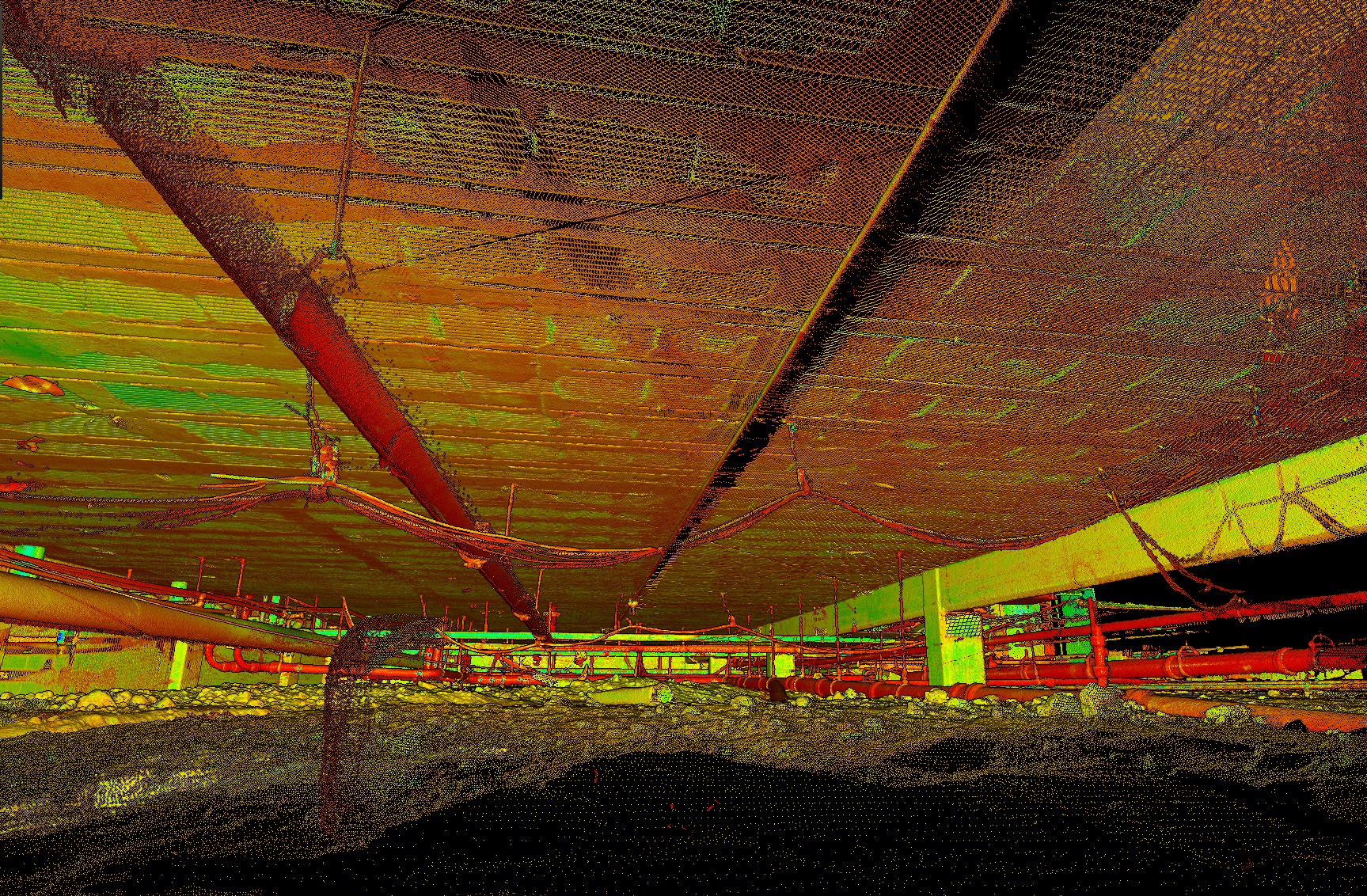
We approached the project with a focus on capturing both the interior spaces and the crawlspace conditions that would influence the mechanical work. The crawlspace covered more than 3,500 square feet, and the conditions required a hands-on approach. I have scanned many crawlspaces over the years, but this one required constant movement through tight and irregular geometry.
I had to crawl through the space and maneuver equipment over and under piping to maintain proper coverage and capture the necessary detail. That kind of work does not look efficient in the moment, but it serves a clear purpose. Accurate data collection in a constrained environment ensures that the resulting model reflects reality.
Small Variations Create Real Problems
The scan did not reveal a single catastrophic issue that would stop the project. Instead, it revealed a series of small variations that would have created challenges if the team had not identified them early. Elevations shifted slightly across different runs. Routing varied just enough to change connection points. Clearances tightened in areas where the drawings suggested more room.
Each condition looked manageable in isolation, but together they would have forced changes during installation. That timing difference drives cost.
From Field Data to Decision-Making
Once we processed the data, we delivered a registered point cloud that the team could use to guide their work. The dataset provided a reliable reference for elevations, routing, and clearances. With that information, the design and fabrication teams could make informed decisions before committing to prefabrication.
That shift in information changes the entire workflow. Instead of asking whether something will fit, the team can focus on how to build it correctly. Instead of discovering conflicts in the field, they can resolve them during planning.
Why This Matters for School Projects
School projects amplify the importance of accurate existing conditions. Limited access windows create pressure on every phase of the work. Crews must complete installation within a defined timeframe, and any delay can disrupt operations once the building returns to use.
Accurate existing conditions help teams maintain control over that schedule. They remove uncertainty and allow work to proceed with fewer interruptions.
The Cost of Assumptions
Many projects accept a level of uncertainty in existing conditions. Teams rely on legacy drawings, spot measurements, or experience to fill in the gaps. That approach can work in some situations, but it introduces risk in projects that depend on precision.
Small differences between assumed and actual conditions often lead to adjustments that consume time and increase cost. Those adjustments usually occur in the field, where changes carry the highest impact.
Closing the Gap Between Plan and Field
Every project includes a gap between what is planned and what exists in the field. That gap grows when teams rely on incomplete information. It narrows when teams verify conditions early and incorporate that information into their workflow.
On this project, the team made that decision before fabrication began, and that decision supported the success of the work.
Start With What Actually Exists
So yes, we scan crawlspaces. We do it because the conditions below determine how well everything above comes together. When the data reflects reality, teams can move forward with confidence. When it does not, they spend time solving problems that could have been avoided.
If a project depends on prefabrication and a tight schedule, the best place to start is with what actually exists.